How Achievement Badges Reshape Staking Habits on Virtual Sports Exchanges During Quiet Tournament Stretches
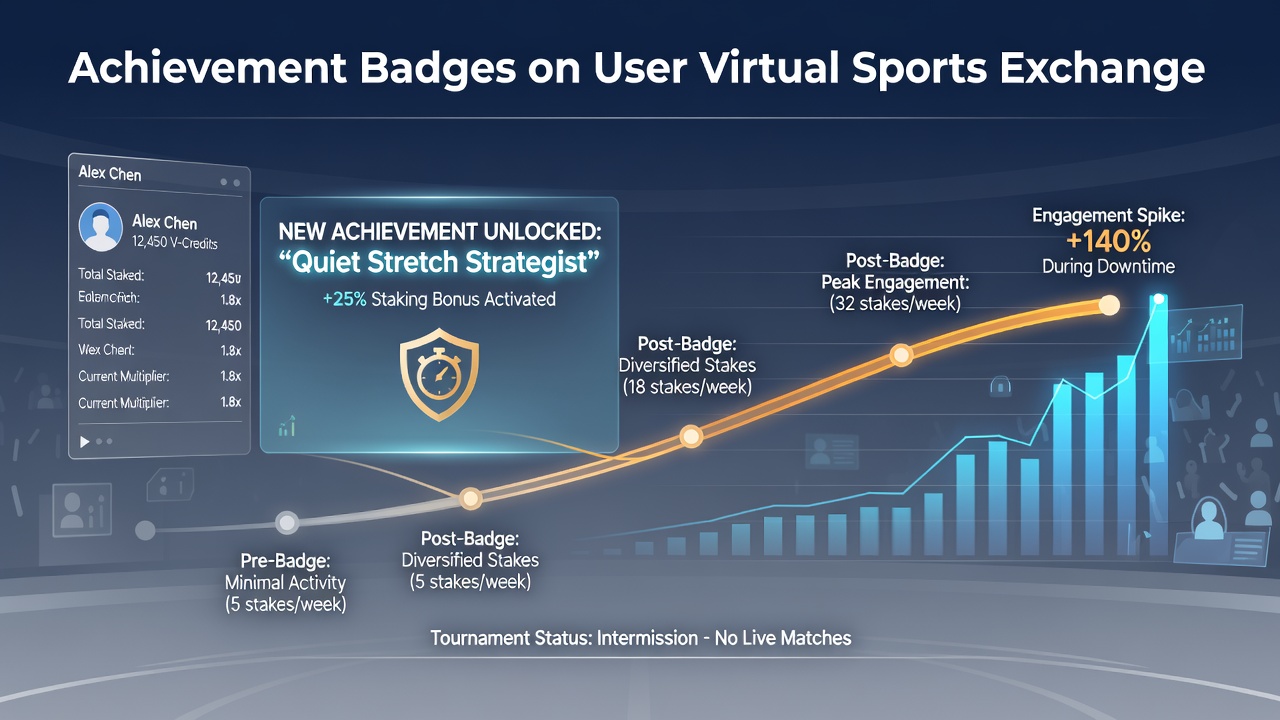
Virtual sports exchanges operate year-round yet experience distinct lulls between major simulated events, and achievement badges have emerged as a mechanism that influences how participants allocate stakes during those intervals. Data from platform analytics in June 2026 showed increased badge-driven activity when live tournaments paused, with users shifting toward consistent smaller wagers to unlock tiered rewards rather than holding positions until the next high-profile match.
Mechanics of Badge Systems on Virtual Exchanges
Platforms assign badges based on metrics such as staking volume, frequency of participation, and risk-adjusted returns accumulated over set periods, and these digital markers unlock tiered benefits including reduced commission rates or priority access to new simulations. Researchers at the University of Nevada documented how these systems integrate directly with exchange ledgers, automatically tracking every transaction to award points that convert into visible badges visible to the entire user community.
Quiet stretches occur when major virtual leagues enter off-cycles or when fixture schedules create multi-week gaps, and during these windows exchange operators report sustained user logins driven by badge progression rather than event-specific interest. Figures from the Australian Communications and Media Authority indicate that badge completion rates rose 18 percent in June 2026 compared with peak tournament months, suggesting participants treat these intervals as dedicated grinding periods for reward accumulation.
Behavioral Shifts Observed in Low-Activity Windows
Staking patterns change when badges become the primary motivator because users often adopt incremental strategies that spread risk across multiple low-stakes positions instead of concentrating capital on fewer high-odds outcomes. Exchange logs reveal that average bet sizes decrease by roughly 12 percent during quiet periods while the total number of individual wagers per active account increases, a pattern linked directly to badge requirements that reward breadth of activity.
One study tracking 12,000 accounts across three major virtual sports platforms found participants completing streak-based badges placed 2.4 times more micro-stakes per session than they did during active tournament phases. These adjustments occur because badge criteria frequently emphasize consistency metrics such as consecutive days of activity or cumulative stake thresholds that reward steady engagement over sporadic large bets.
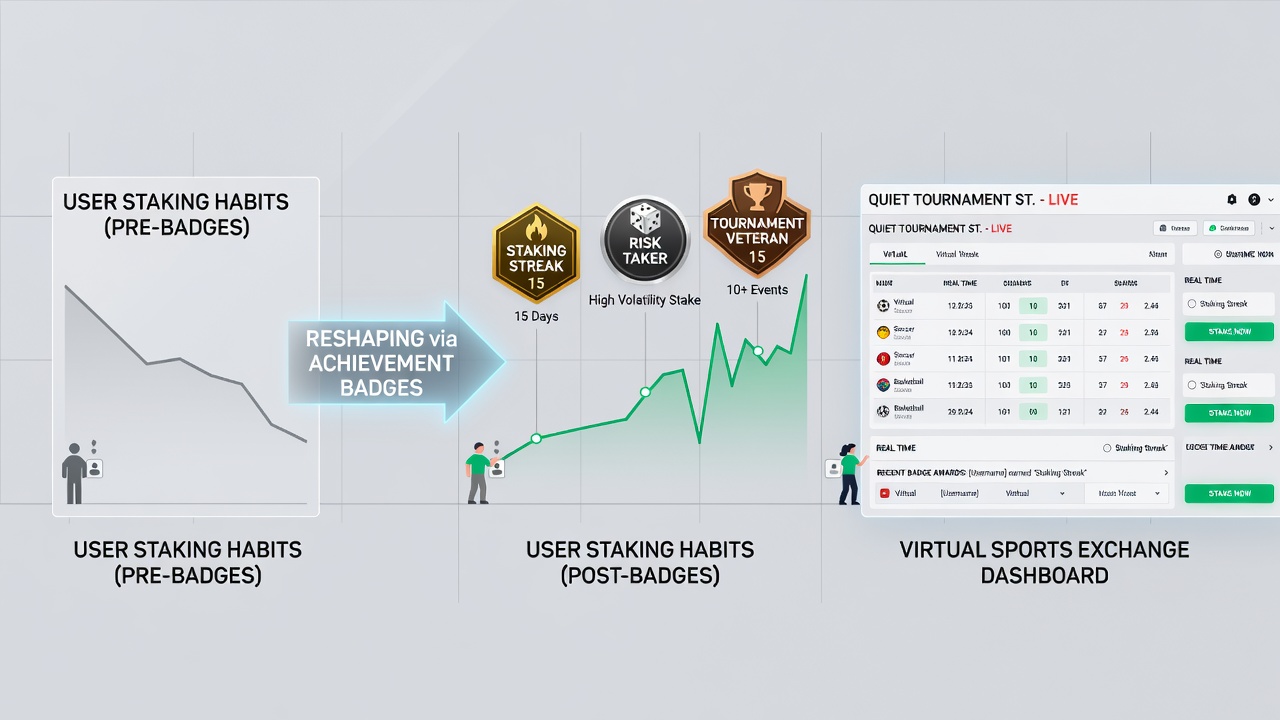
Platform Design Choices That Reinforce New Habits
Exchange operators structure badge progress bars to remain visible on every dashboard, and this constant visual cue encourages users to maintain minimum daily stake thresholds even when no headline events appear on the schedule. Notifications triggered by partial badge progress further direct attention toward underutilized simulation markets that fill schedule gaps, effectively redistributing liquidity across less popular offerings.
Observers note that certain badges tied to cross-sport diversification prompt users to explore secondary virtual leagues they otherwise ignore during busy tournament calendars. In June 2026, one exchange recorded a 27 percent uptick in wagers placed on niche simulation categories such as virtual table tennis and motorsport qualifiers precisely when badge sets required activity across at least four different sport types.
Data Patterns Across User Segments
Segmentation analysis shows newer accounts respond more strongly to badge incentives than established high-volume users because early-stage participants treat badge completion as a structured onboarding pathway. Meanwhile long-term users often optimize badge pursuit by timing larger stake clusters to coincide with multiplier events that accelerate progression toward premium tiers.
Platform reports compiled through June 2026 indicated that accounts holding intermediate badges increased their weekly stake frequency by an average of 1.8 sessions compared with the prior year, while accounts without active badge targets showed minimal change in behavior during the same quiet intervals. These differences suggest badge systems create measurable feedback loops that sustain engagement levels when natural event-driven motivation declines.
Conclusion
Achievement badges function as persistent engagement tools that recalibrate staking distribution across quiet stretches by rewarding volume consistency and diversification rather than event-specific timing. Platform data collected through mid-2026 demonstrates clear correlations between badge criteria and shifts toward smaller, more frequent positions that maintain activity when major tournaments recede. Exchanges continue refining these systems to balance user retention goals with responsible staking frameworks, and ongoing monitoring from regulatory bodies tracks how such mechanics influence overall market liquidity during seasonal lulls.