How Regulatory Shifts Reshape Virtual Table Game Odds Reporting in Emerging Asian Markets
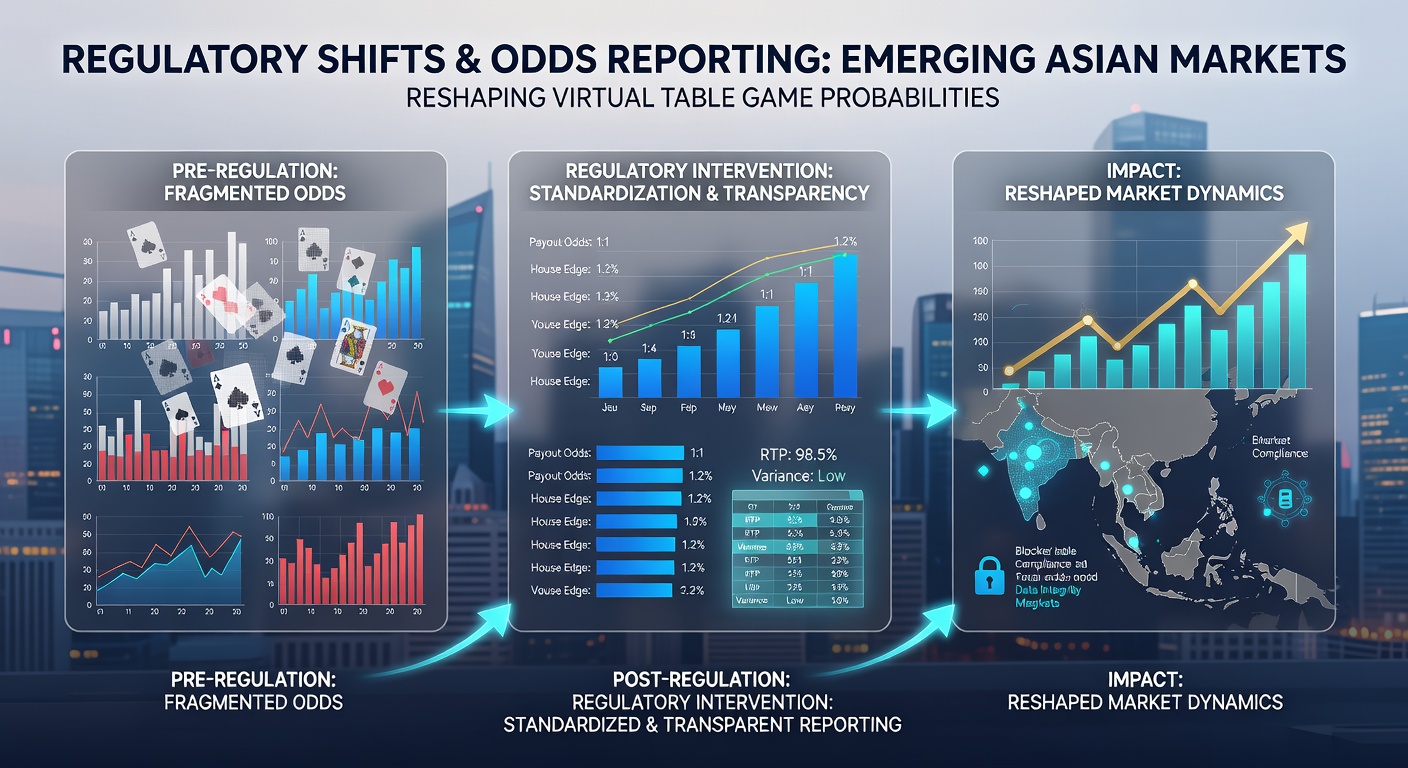
Regulatory changes across emerging Asian markets continue to alter how operators disclose odds for virtual table games such as online blackjack, roulette, and baccarat. Governments in the Philippines, Vietnam, and Malaysia have introduced updated frameworks that mandate standardized reporting of return-to-player percentages, random number generator certifications, and house-edge calculations, which forces platforms to publish data in formats that regulators can audit more easily. These requirements build on earlier licensing rules and now tie directly to renewal approvals for digital gambling licenses.
Operators must submit quarterly reports that detail odds calculations for every virtual table game variant they offer, and the submissions include source code audits plus live testing logs from approved laboratories. Data shows that compliance teams now allocate additional resources to maintain real-time dashboards that track RTP fluctuations caused by game updates or software patches. Such systems allow regulators to cross-reference reported figures against actual player outcomes collected through centralized monitoring portals.
Key Markets Driving the Changes
The Philippine Amusement and Gaming Corporation expanded its e-gaming guidelines in late 2025 to cover virtual table products hosted on offshore platforms that target domestic players. New provisions require each game title to display its theoretical RTP value on the interface at all times while also filing the same metric with PAGCOR within 48 hours of any parameter adjustment. Similar steps appeared in Vietnam when the Ministry of Finance rolled out digital betting decrees that took effect at the start of 2026.
Malaysian authorities followed with amendments to the Remote Gambling Act that emphasize transparent odds disclosure for live-dealer hybrids and fully automated table simulations. These rules specify that operators must use encryption standards approved by local testing houses and must archive every odds calculation for a minimum of five years. Observers note that the combined effect across these jurisdictions has produced a more uniform set of reporting templates that reduce discrepancies between markets.
Technical Requirements and Reporting Standards
Updated technical standards now mandate that random number generators undergo evaluation against ISO/IEC 17025 protocols before any virtual table game receives approval. Once certified, the RNG seed values and payout algorithms must appear in machine-readable formats that regulators can import directly into oversight software. Operators also submit simulation datasets that demonstrate expected long-term outcomes across millions of rounds, which allows authorities to verify that published odds align with actual performance metrics.
Platforms that fail to meet these benchmarks face license suspension until corrective audits are completed. Research indicates that the volume of required documentation has increased by roughly 40 percent compared with 2023 levels, prompting many companies to invest in automated compliance platforms that generate the necessary files without manual intervention. Those systems pull data from game servers in real time and format it according to each jurisdiction's schema.
Impact on Operators and Data Infrastructure
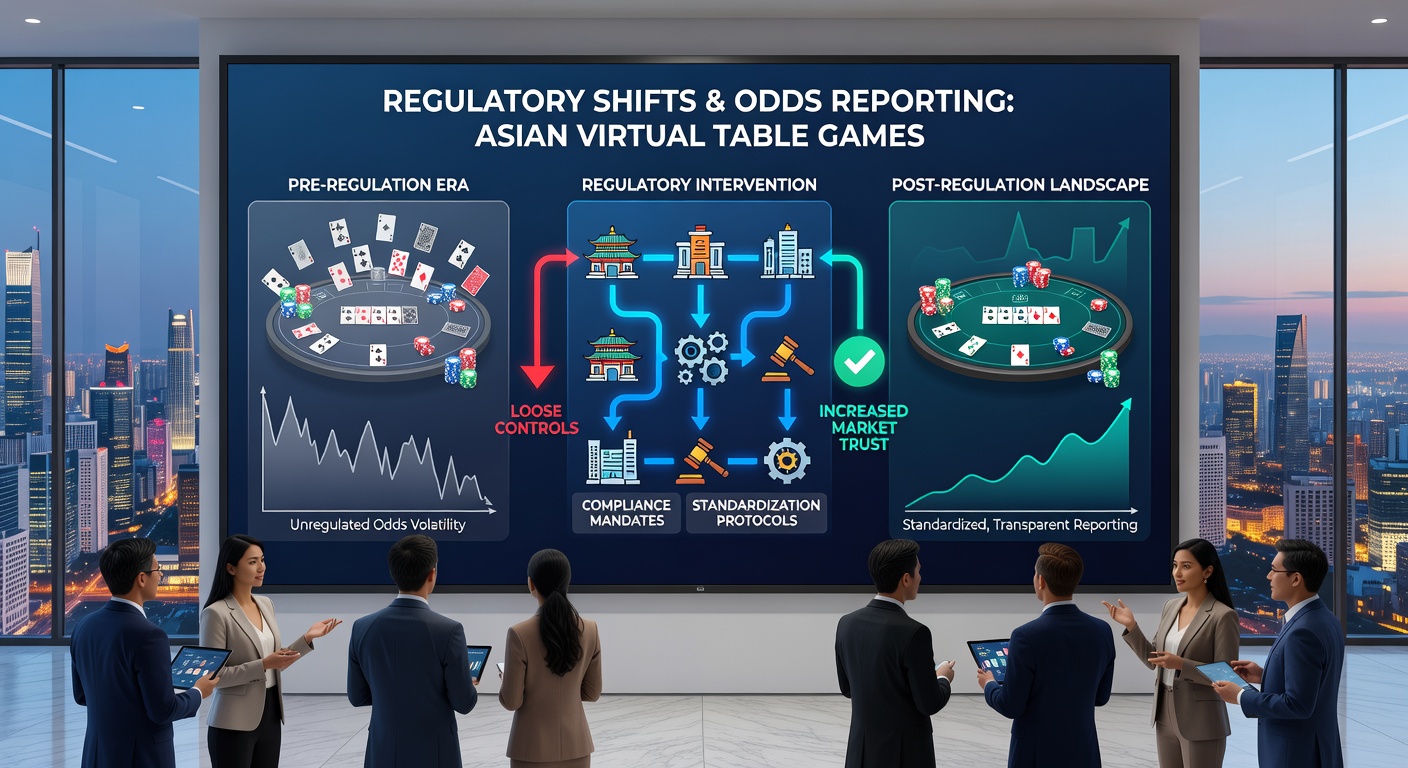
Companies operating across multiple Asian territories have begun consolidating their reporting pipelines into single repositories that satisfy simultaneous submissions to several regulators. This approach reduces duplication yet requires careful mapping of each market's unique data fields. In May 2026, several Philippine-based platforms completed their first full cycle under the revised PAGCOR rules, revealing that average reported RTP values for virtual blackjack remained within 0.3 percentage points of previously published figures.
Industry associations such as the Asian Gaming Council have published guidance documents that help members interpret the new standards. These documents outline best practices for presenting odds information to players while meeting regulator expectations for audit trails. Training programs organized by the council now focus on data governance and secure transmission protocols that protect sensitive payout algorithms during the reporting process.
Player Access to Odds Information
Regulators have also directed operators to make simplified odds summaries available directly inside game lobbies so that players can review RTP values before placing wagers. The summaries must use plain-language descriptions alongside the numerical percentages, and they must update automatically whenever underlying parameters change. This layer of disclosure sits on top of the detailed technical filings that regulators receive, creating two distinct streams of information that serve different audiences.
Studies conducted by research teams at the National University of Singapore examined early adoption patterns and found that clearer disclosure correlated with modest increases in session length among players who actively checked the displayed RTP figures. The same studies recorded no measurable shift in overall house-edge outcomes, which remained consistent with pre-regulation baselines. Regulators continue to monitor whether these transparency measures produce sustained behavioral changes or simply satisfy compliance checkboxes.
Future Outlook and Ongoing Adjustments
Additional markets including Indonesia and Thailand have signaled interest in adopting comparable reporting regimes by 2027. Draft regulations under discussion emphasize interoperability between national databases so that cross-border operators can submit a single package that satisfies multiple jurisdictions. Technical working groups composed of regulators, testing labs, and software providers are already mapping the data fields required for such harmonization.
Continued refinement of these frameworks will likely focus on real-time verification tools that compare reported odds against live game feeds. Pilot programs scheduled for the second half of 2026 will test blockchain-based ledgers that timestamp every odds calculation and make the records tamper-evident. Should those pilots succeed, regulators may incorporate distributed ledger requirements into future licensing conditions.
Conclusion
Regulatory developments across emerging Asian markets have established clearer protocols for virtual table game odds reporting while increasing the technical and administrative burden on operators. Centralized monitoring, standardized data formats, and mandatory player-facing disclosures now form core elements of compliance in the Philippines, Vietnam, and Malaysia. As additional jurisdictions prepare similar measures, the industry continues to adapt its data infrastructure to meet evolving expectations for transparency and auditability.