Notification Cadence Effects on Retention Rates Within App-Based Betting Platforms
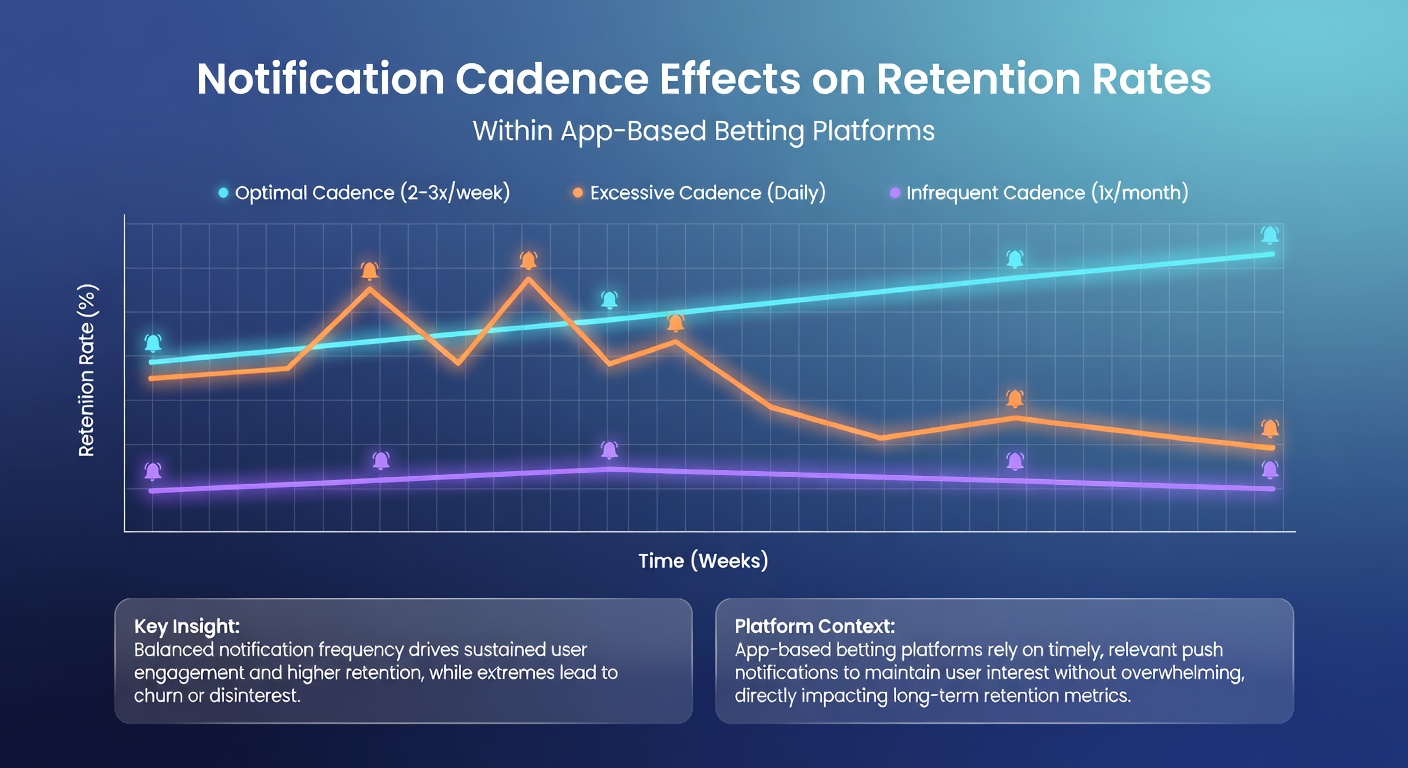
App-based betting platforms rely on push notifications, email alerts, and in-app messages to maintain contact with users, yet the timing and frequency of these communications directly influence how long players remain active. Research indicates that notification cadence creates measurable patterns in retention data across markets, with operators tracking open rates, session starts, and deposit activity as key indicators. Observers note that platforms collect these metrics daily and adjust delivery schedules based on aggregated user responses rather than individual preferences.
Defining Notification Cadence in Betting Contexts
Notification cadence refers to the scheduled intervals at which betting apps send messages about odds updates, bonus offers, live event reminders, and account activity summaries. Data from platform analytics shows these messages arrive at frequencies ranging from multiple times per day to once per week, depending on user segment and regional regulations. Those who manage large user bases report that cadence settings often vary by time zone, with peak delivery aligned to evening hours in major markets.
Operators segment audiences into categories such as high-frequency bettors, occasional players, and dormant accounts before determining how often each group receives alerts. This segmentation approach allows systems to test different intervals simultaneously and compare resulting retention curves over periods of 30 to 90 days.
Documented Retention Patterns Across Cadence Levels
Figures from multiple platform studies reveal that moderate notification schedules, typically three to five messages per week, correlate with higher 30-day retention compared to daily blasts or minimal contact. When cadence exceeds seven messages weekly, churn rates rise as users disable notifications or delete apps, according to aggregated industry reports. Conversely, intervals stretched beyond ten days produce gradual drop-off as engagement signals weaken and users forget about available features.
One analysis of North American operators found that users receiving event-specific notifications timed to major sports fixtures maintained longer active streaks than those on generic daily schedules. Researchers tracked this through cohort comparisons, noting that relevance of content interacts with frequency to shape outcomes. Platforms in Europe observed similar trends during the 2025 football season, where targeted alerts outperformed blanket messaging by measurable margins in session duration metrics.
Regional Differences and Data Collection Practices
Canadian provincial regulators require operators to log notification-related complaints and retention statistics, creating datasets that link cadence choices to player longevity. Australian market reports compiled through 2025 similarly highlight how state-level rules on marketing frequency affect how aggressively apps can contact users without triggering regulatory review. These geographic variations mean global operators maintain separate cadence rulesets rather than applying uniform schedules across all jurisdictions.
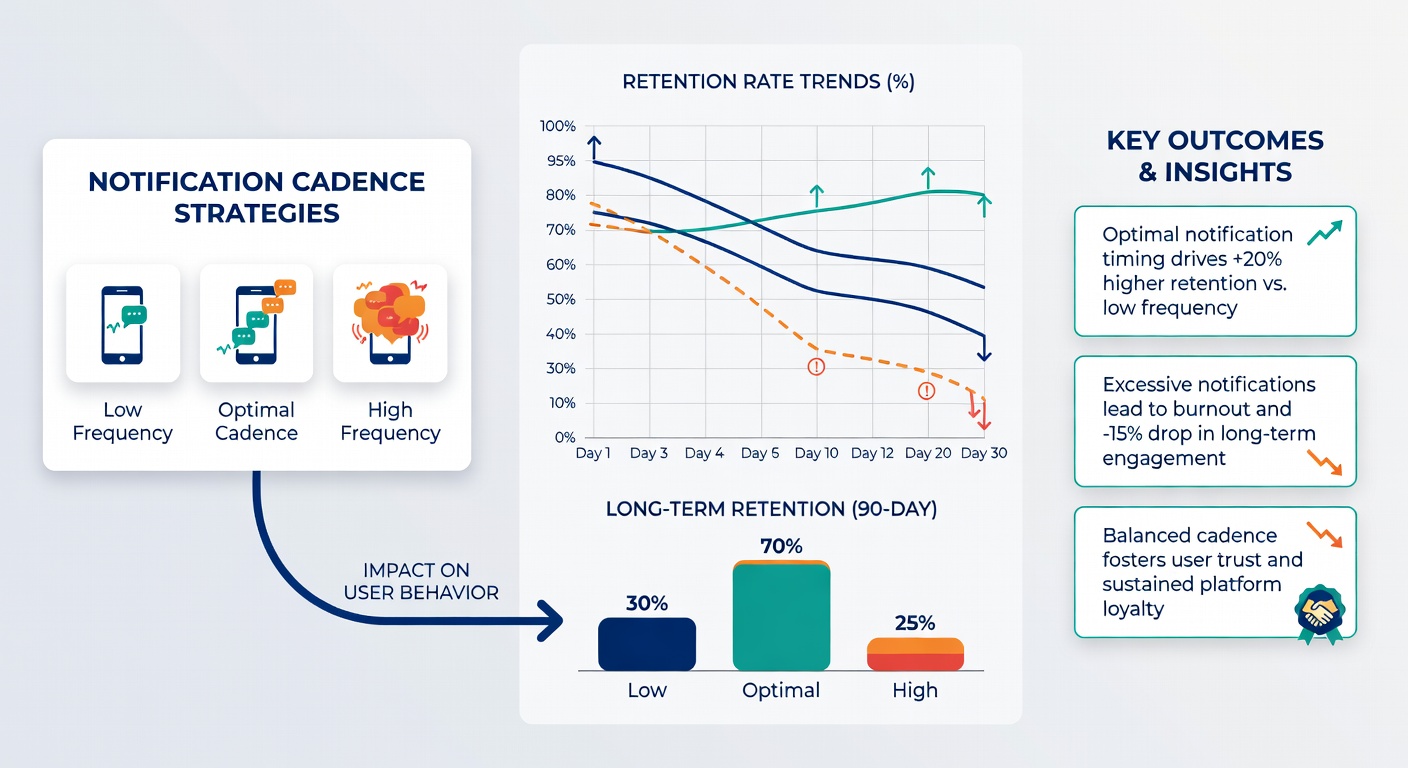
As of May 2026, several platforms began incorporating machine learning models that dynamically adjust cadence based on real-time engagement signals rather than fixed calendars. These systems reduce message volume for users showing early signs of fatigue while increasing frequency for segments with rising activity, producing retention improvements documented in internal performance reviews. Industry groups such as the Canadian Centre for Gaming Research have published summaries of these adaptive approaches.
Interaction With User Behavior and Platform Features
Retention data further demonstrates that notification effects compound with other app elements including loyalty programs, live betting interfaces, and deposit bonuses. Users who receive timely alerts about expiring promotions show higher conversion to deposits, yet the same cadence applied to low-relevance content accelerates disengagement. Platform teams therefore refine content tagging systems to ensure each message aligns with documented user interests before delivery occurs.
Case examples from Asian markets illustrate how cultural preferences for evening messaging influence optimal cadence, with operators reporting stronger retention when messages cluster around post-work hours rather than morning distributions. European operators have noted parallel patterns tied to local sports calendars, adjusting volume during off-peak periods to avoid notification overload.
Measurement Methods and Industry Benchmarks
Analysts measure cadence impact through A/B testing frameworks that isolate frequency while holding content constant. Retention is tracked via metrics such as day-7 and day-30 active user percentages, alongside lifetime value calculations that account for notification-driven deposits. Reports compiled by the International Gaming Institute provide cross-operator benchmarks that help new entrants calibrate initial schedules before accumulating proprietary data.
These testing protocols also capture secondary effects including notification opt-out rates and app store review sentiment tied to messaging volume. Operators integrate these signals into broader retention models that forecast long-term user value under different cadence scenarios.
Conclusion
Notification cadence functions as a controllable variable that shapes retention outcomes in app-based betting platforms through its influence on engagement frequency and user fatigue levels. Evidence from operational datasets and regulatory filings across multiple regions demonstrates consistent patterns where balanced schedules support longer user lifespans while excessive or insufficient contact accelerates churn. Platforms continue refining these approaches through segmented testing and adaptive systems as market conditions evolve.