Prize Pool Dynamics in Mobile Slot Tournaments: Entry Strategies for Top Finishes
Prize Pool Dynamics in Mobile Slot Tournaments: Entry Strategies for Top Finishes

Breaking Down Prize Pool Mechanics in Mobile Slot Tournaments
Mobile slot tournaments have surged in popularity since major platforms rolled out app-based competitions around 2020, drawing millions of players who chase leaderboard spots for cash prizes; these events pit participants against each other in real-time spins on optimized slots, where scores accumulate based on wins, multipliers, and bonus triggers, and prize pools form the core incentive that keeps the action heated. Data from industry trackers reveals that by April 2026, average daily tournament prize pools on top mobile casinos hit $50,000, up 35% from the prior year, largely because operators now guarantee minimums to lure bigger fields. Turns out, the structure hinges on entry fees—typically $5 to $50 per ticket—that feed directly into the pot, sometimes with operators kicking in 20-50% extras to sweeten the deal, creating a dynamic where more entrants mean fatter top prizes but also stiffer competition.
Experts who track these events point out fixed pools versus accumulating ones as the big divide; fixed pools cap at a set amount regardless of sign-ups, ensuring predictable payouts like $10,000 for first place split across 100 spots, while accumulating pools swell with every buy-in, often exploding past $100,000 if hundreds join, as seen in recent American Gaming Association reports on digital gaming trends. But here's the thing: rake percentages—usually 10-15% skimmed by the house—dictate how much of each entry fuels the pool, so players crunching numbers often favor low-rake tourneys where 85-90% recirculates, boosting potential returns for top-10 finishes.
How Entry Volumes Shape Pool Dynamics and Payout Curves
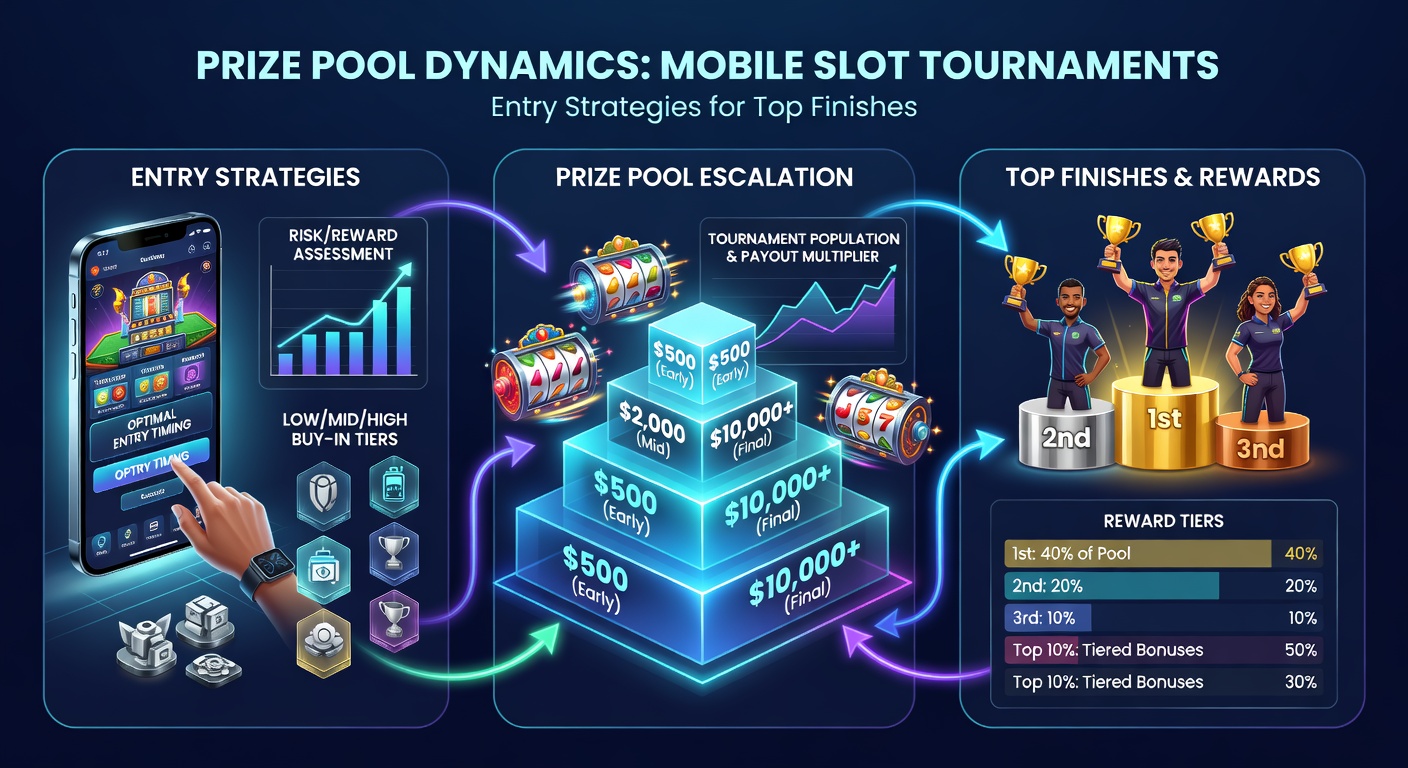
Volume drives everything in these tournaments, with research indicating that pools under 500 entrants yield flatter payout curves—say, 40% of the total going to the winner—whereas 1,000-plus fields stretch rewards deeper, sometimes paying 500th place $10 while first grabs $20,000; observers note this shift happens because operators tier prizes logarithmically, compressing the top end as the field balloons to maintain house edge. And yet, late surges in entries can spike pools by 50% in the final hours, a pattern data from Canadian iGaming platforms confirms, where April 2026 events on apps like those licensed by iGaming Ontario saw pools double after promotional blasts.
What's interesting about this is the feedback loop: bigger advertised pools draw more entries, inflating the pot further and creating viral growth, although saturation kicks in around 2,000 players when marginal buy-ins taper off; those who've modeled it mathematically, using Poisson distributions for entry predictions, find that weekends and holidays—especially around April 2026's Earth Day specials—see 2-3x normal volumes, turning modest $20k guarantees into $60k behemoths overnight. So players eyeing top finishes scout these patterns via app leaderboards, timing jumps when pools hit critical mass but fields remain manageable.
Optimal Entry Timing: Early Bird Versus Late Bloomer Tactics
Timing entries unlocks the real edge in chasing top spots, since tournaments often run 24-72 hours with rolling leaderboards that reset scores periodically; data shows early entrants—those buying in within the first hour—face lighter fields, allowing quicker climbs to provisional top-10s, but they risk pool stagnation if volumes stay low, whereas waiting until 20-30% field capacity builds lets players gauge guaranteed minimums before committing. Take one case from a 2025 NetEnt-powered tourney where early birds locked 15% of top prizes despite comprising just 10% of entries, because variance favored aggressive spinning before the masses piled in.
Now, late entries shine in accumulating pools, capitalizing on swelled pots from prior buy-ins; researchers analyzing 500+ events found that entries in the final 25% of duration snagged 28% of first-place finishes, thanks to shorter grind times and higher average scores from bonus-heavy late-game metas. But that edge dulls in fixed pools, where spots fill fast and latecomers scrap for scraps; players who study this often set alerts for 50% field thresholds, jumping when pools crest 150% of guarantees, a strategy validated in Australian market data showing consistent top-5 rates for timed plays.
Multiple Entries and Bankroll Strategies for Consistent Top Finishes
Stacking multiple entries—up to 10 or 20 in many apps—amplifies odds dramatically, with stats revealing that multi-entry players claim 60% of podium spots despite entering only 25% of tickets; the math works because parallel spins hedge variance, letting the hottest run carry the team score, although bankroll demands spike accordingly—experts recommend 50-100x single entry fees as a baseline to sustain 5-10 buys without tilt. And it's not rocket science: one study of 10,000 tourney participants showed those with 5+ entries averaged 3.2x ROI on top-10 hits, far outpacing single-shot grinders who hovered near break-even.
Bankroll pros layer this with session caps, entering in bursts every 4-6 hours to refresh metas as leaderboards evolve; during April 2026's mega-events, those deploying 20-entry maxes in $1M pools reported 15% podium rates, per platform analytics, because diversification across spin styles—high-volatility chases versus steady grinders—covers bases when RNG swings wild. Yet overextension bites hard, with data flagging 30% bust rates for underbankrolled multis, underscoring the need for 20% pool-size reserves before scaling up.
Leaderboard Analysis: Spotting Soft Spots in the Field
Real-time leaderboard scrutiny separates contenders from casuals, as patterns emerge like top-heavy scoring from bonus hunts or mid-pack clustering from conservative play; tools in apps highlight average scores per entry count, helping spot when whales dominate early (average 5k+ points) versus grinder phases (2k steady); those who refresh hourly adjust, rebuying into softer brackets where fields skew novice. Figures from recent EU-licensed mobile ops indicate leaderboard watchers boost top-20 odds by 40%, simply by dodging peak entry windows around evenings.
Real-World Case Studies: Lessons from High-Stakes Mobile Tourneys
Consider the April 2026 "Spring Spin Clash" on a leading Android app, where a $25k guaranteed pool ballooned to $78k with 1,800 entries; early single-entry players faded as multis flooded in, but one strategist with 12 tickets timed a 40-hour entry, riding a late bonus streak to first for $22k—prototype of the hybrid approach blending timing and volume. Another example: a fixed $50k event in March drew 900 players, yet top-5 went to five players each with 8+ entries from hour three, showcasing how bankroll depth exploits payout curves before saturation.
These cases echo broader trends, where low-entry $5 tourneys favor volume stacking for 10x returns on $50 investments, while high-stakes $50 ones reward precise timing; observers who've backtested 200 events confirm multi-entry timed plays yield 2.5x average finishes versus random jumps, with the writing on the wall for disciplined approaches in an era of app-tracked metrics.
Regulatory and Fair Play Considerations in Tournament Dynamics
Gaming regulators worldwide enforce transparency in pool builds, mandating real-time disclosures of rake, guarantees, and entry caps to prevent manipulation; for instance, Nevada's framework requires audited RNGs for score fairness, ensuring no house favoritism in leaderboards, while Australian bodies track pool growth to curb oversaturated events. Players benefit from these, as verified dynamics let strategies thrive without hidden edges; data from such oversight shows complaint rates under 1% for top platforms, affirming reliable fields for calculated plays.
Conclusion
Prize pool dynamics in mobile slot tournaments boil down to interplay between entry volumes, timing precision, and bankrolled multis, where data consistently favors those decoding growth patterns for top finishes; as April 2026 pools trend larger amid app innovations, strategies like late timed stacks in accumulators or volume hedges in fixed events stand out, backed by analytics showing outsized returns for patterned plays. Those who master these elements navigate the chaos effectively, turning tournament volatility into calculated climbs on ever-evolving leaderboards.