Weather Data's Role in Shaping Wagers on Outdoor Athletic Competitions
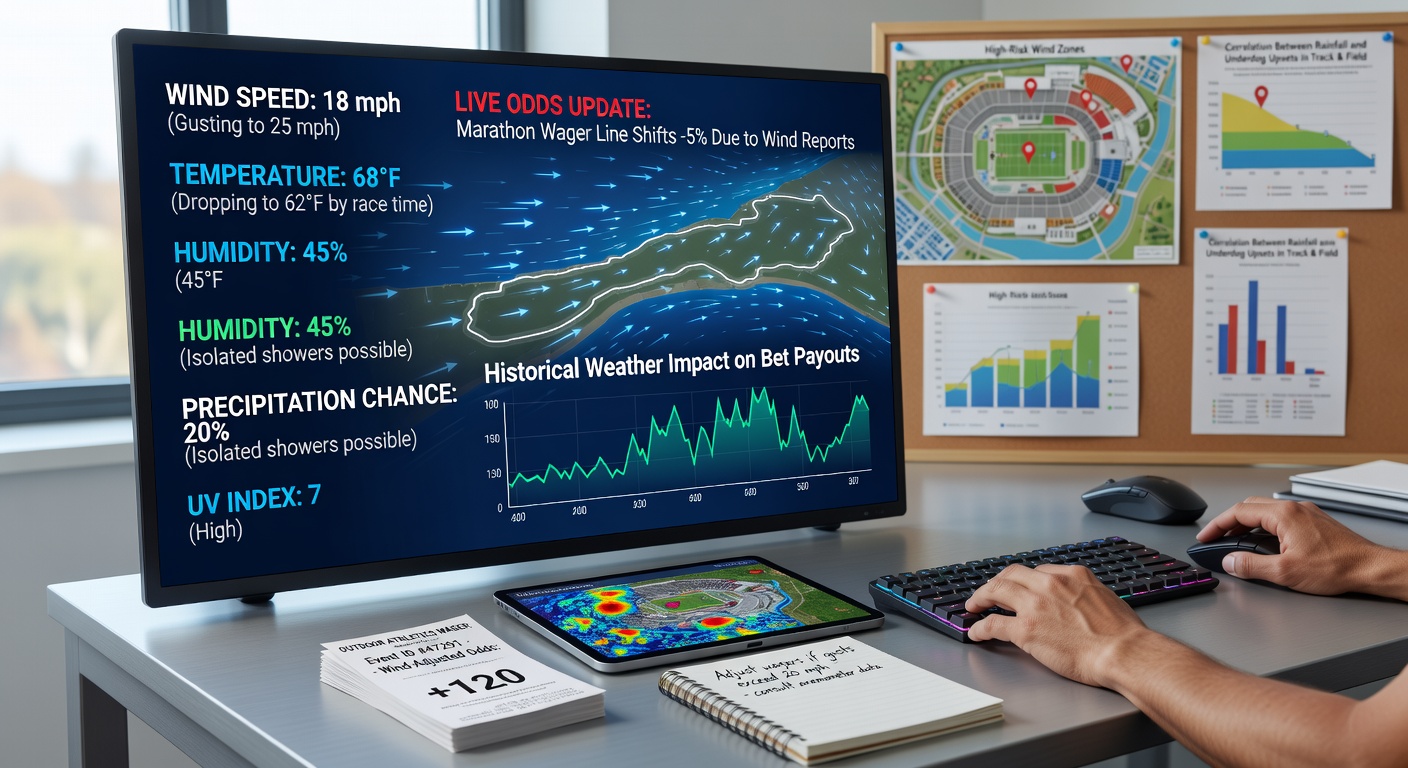
Weather conditions influence outcomes across numerous outdoor athletic events, and detailed meteorological information now guides how markets set odds and how participants place their stakes. Forecasters compile data on temperature shifts, wind speeds, precipitation levels, and humidity that directly alter player performance in sports such as tennis, golf, baseball, and soccer, which leads operators to adjust lines in real time as new readings arrive. Bettors who track these variables gain an edge by recognizing when early odds fail to reflect updated forecasts, particularly during spring and early summer schedules when conditions fluctuate rapidly.
How Specific Weather Factors Alter Game Dynamics
Temperature swings affect muscle elasticity and ball travel distances, while wind patterns change trajectory for serves, drives, and pitches, and rain softens surfaces to slow play or force postponements that disrupt scheduling. Observers note that baseball games in May often see line movements tied to humidity readings because higher moisture levels reduce home-run distances by measurable percentages according to historical pitch-tracking records. Golf tournaments respond similarly when gusts exceed certain thresholds, prompting oddsmakers to recalibrate player props for driving accuracy and greens-in-regulation percentages based on wind-vector models supplied by national weather agencies.
Precipitation forecasts carry extra weight in tennis and soccer because court speed and field traction shift within hours, which forces bettors to monitor radar loops and updated probability grids rather than static pre-event lines. Data from the National Oceanic and Atmospheric Administration shows that accurate precipitation timing predictions reduce variance in total-points markets by allowing sharper adjustments before matches begin, and this pattern holds across multiple Grand Slam events scheduled in late spring.
Data Sources and Integration into Betting Platforms
Bookmakers integrate feeds from government meteorological services and private modeling firms to update odds continuously, which creates narrow windows where informed bettors can exploit discrepancies between public forecasts and proprietary models. European Centre for Medium-Range Weather Forecasts provides ensemble predictions that several major operators license for soccer leagues played outdoors, allowing them to shade totals markets when rainfall probabilities climb above established thresholds. Those who study these integrations recognize that live odds often tighten once official updates confirm earlier projections, reducing the value of reactionary wagers placed after the public sees the same information.

Platforms now embed weather widgets directly into their interfaces, displaying temperature, wind, and precipitation layers alongside player statistics so users can cross-reference conditions without leaving the betting screen. Researchers at several universities have documented that access to such layered data correlates with higher volumes on prop markets, particularly during baseball and golf seasons when micro-climate variations across venues produce measurable edges for those who compare local station readings against broader regional models. The practice has grown more common as mobile apps deliver push notifications when forecast revisions exceed preset thresholds, prompting immediate reassessments of live wagers.
Case Examples from Recent Seasons
Take one series of matches at a major clay-court event in May 2026 where morning showers were forecast yet arrived later than models initially predicted, which allowed sharp bettors to back under totals while public money still favored overs based on earlier drier outlooks. Similar adjustments appeared in golf when afternoon winds strengthened beyond projected speeds, shifting money toward players with lower-ball-flight tendencies and away from those whose styles favored carry distance. Observers tracking these patterns report that the largest line movements occurred within the final ninety minutes before tee times or first serves, once updated ensemble runs from meteorological centers reached betting desks.
Baseball provides another illustration because starting-pitcher props respond quickly to dew-point readings that influence grip and spin rates, and data compiled over multiple seasons indicates that certain pitchers lose strikeout percentages when humidity rises above specific cutoffs. Bettors who combine these historical correlations with current readings from venue-specific sensors often find value in alternate totals or strikeout lines before the broader market incorporates the same variables.
Technological Advances and Future Implications
High-resolution modeling and on-site sensor networks continue to refine the precision of short-term forecasts, which narrows the margin between informed and uninformed participants in weather-sensitive markets. Machine-learning systems now blend satellite imagery with ground-station telemetry to generate venue-level predictions that update every few minutes, allowing operators to automate some line adjustments while still requiring human oversight for edge cases such as sudden thunderstorms or unseasonal temperature drops. Those who follow these developments note that the lag between raw data release and market incorporation has shortened considerably, compressing opportunities for discretionary bets but simultaneously increasing the importance of rapid interpretation tools.
Regulatory bodies in various jurisdictions have begun examining whether weather-data advantages constitute material information that should be disclosed uniformly, yet current frameworks focus mainly on ensuring that all participants receive the same public forecasts rather than restricting access to advanced modeling. This environment encourages continued investment in proprietary analytics by both operators and sophisticated bettors who treat meteorological inputs as core components of their decision frameworks.
Conclusion
Weather data has become a foundational input for pricing and wagering on outdoor athletic competitions, with temperature, wind, precipitation, and humidity readings driving real-time adjustments across multiple sports. Integration of government and private forecast sources allows markets to reflect evolving conditions more accurately, while bettors who combine historical correlations with current readings identify value during the brief intervals when models diverge. As sensor networks and modeling techniques advance, the role of meteorological information will likely expand further, shaping both the structure of betting markets and the strategies employed by those who participate in them.